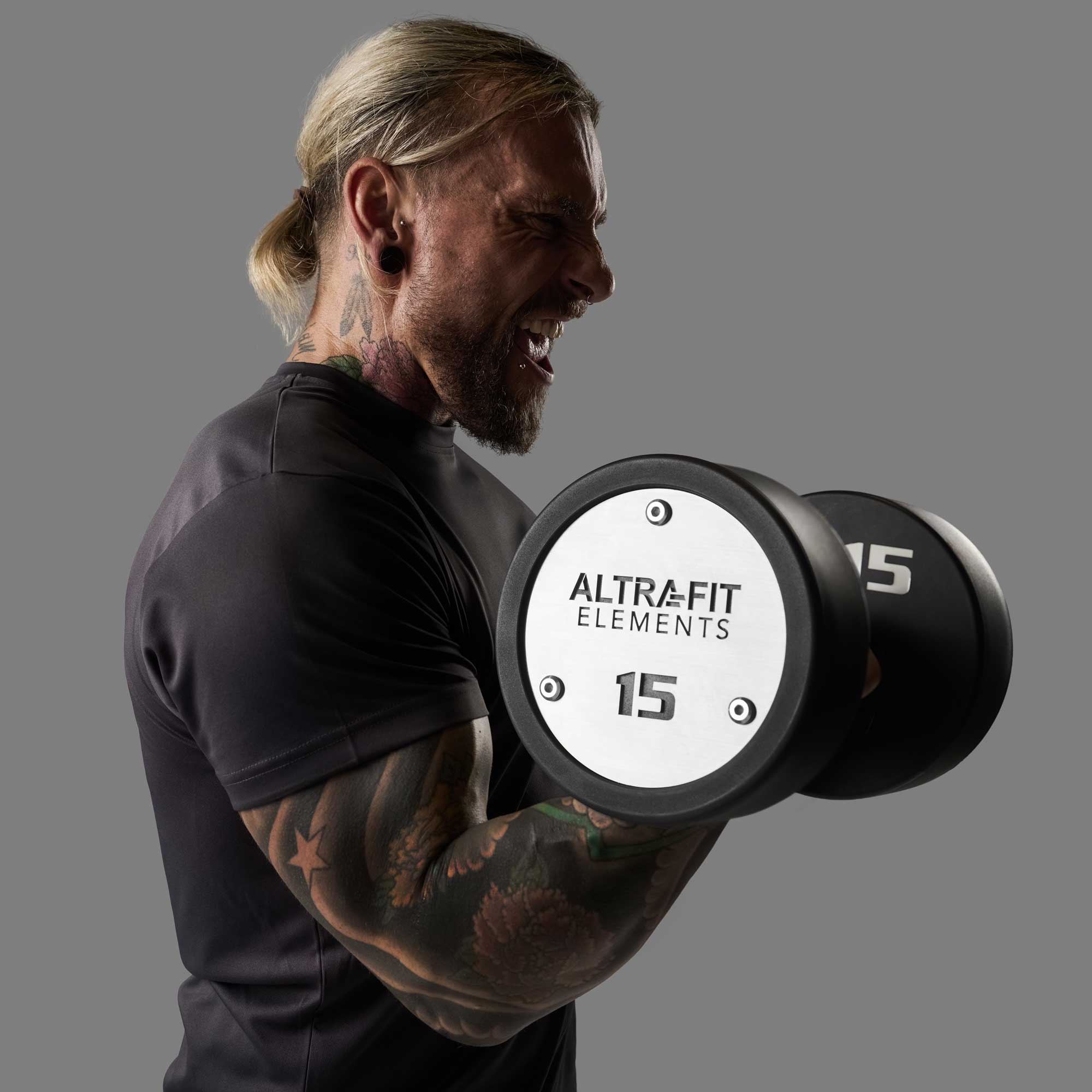
How to Choose Commercial Dumbbells: Urethane, Rubber and Neoprene
Dumbbells are the hardest working kit on any gym floor and the first thing members notice when it starts to look tired. They are also the purchase operators most often get slightly wrong, usually by spreading the budget evenly across a range where the use is anything but even.
This guide covers the decisions that actually affect cost and lifespan: which coating, what range, sets or pairs, and the racking question that gets left until last and should not be.
Coating: urethane, rubber or neoprene
This is the decision with the biggest effect on how the gym looks in three years.
- Urethane. The commercial standard. It resists tearing, gouging and fading far better than rubber, holds its colour, and does not develop the smell rubber does in a warm room. It costs more up front and is worth it anywhere the dumbbells are in constant shared use.
- Rubber. Cheaper, and perfectly serviceable in lower traffic settings. It scuffs and fades faster, and in an enclosed free weight area the odour is noticeable when the room is busy.
- Neoprene. A soft, grippy coating over a cast iron core, used on lighter studio weights. Comfortable to hold for long sets and easy to wipe down between classes. It is a studio material, not a free weight floor material.
A useful rule: urethane on the gym floor, neoprene or urethane in the studio depending on how heavily the timetable runs.
What weight range to buy
A 2kg to 40kg ladder covers the great majority of what happens in a general facility. Add 42kg to 60kg only if you have a dedicated strength area with the members to use it, because heavy pairs are used far less often and need the most robust storage.
For studio and group exercise, a separate 1kg to 10kg range in 1kg steps does a different job entirely. Do not try to cover both with one set. Class members need light weights in fine increments and enough of them for everyone in the room at once.
Increments matter more than the top end
A 2kg jump at the bottom of the range is a large relative increase. Going from 4kg to 6kg is a 50 percent jump, which is why members get stuck. Finer increments at the light end keep progression realistic, particularly for rehab, older members and anyone new to training.
At the heavy end the opposite applies: nobody needs 2kg precision at 50kg, and the extra pairs cost money and floor space.
Sets or individual pairs
Buying by the set is usually cheaper per kilo and, more importantly, gives you a complete uninterrupted ladder. Gaps are what members notice and work around, and they tend to appear exactly where use is heaviest.
Sets are the efficient choice when equipping a new area. Individual pairs are the right call for filling gaps, replacing damaged weights, or doubling up the middle of a range you already own.
How many of each
The most common mistake is one pair of everything. In practice the 4kg to 20kg range takes the overwhelming majority of the load, so that band is where you double up. Two pairs of the popular middle weights removes almost all the queuing in a busy free weight area for relatively little money.
In a studio, work from class capacity instead: everyone needs the same thing at the same time, so depth in a few weights beats breadth across many.
The racking decision
Buy the storage at the same time as the weights, not a year later. Racking bought upfront gets designed into the floor plan. Racking bought as an afterthought ends up wherever it fits, which is usually in the way.
- Horizontal racks. Five pair and ten pair units, the standard choice for a free weight area. Check the maximum load against what you intend to put on it: a full ten pair rack of heavy dumbbells is a lot of weight on one frame.
- Vertical racks. A smaller footprint for tighter floors, at the cost of slightly slower access.
- Mobile studio racks. On wheels with locking casters, for rooms that get reset between classes. In a shared studio this is usually the only workable answer.
Dumbbells with an obvious home get put back. Dumbbells without one become a trip hazard and a manual handling risk, and they are the single clearest signal that a gym is not being looked after.
Frequently asked questions
Are urethane dumbbells worth the extra cost?
In a commercial setting, yes. Urethane resists tearing and fading far longer than rubber, so the heads keep their finish and the gym keeps looking new. Over a replacement cycle it usually works out cheaper, and it avoids the odour problem rubber develops in warm rooms.
What dumbbell range does a commercial gym need?
A 2kg to 40kg ladder in 2kg increments covers most general facilities. Add 42kg to 60kg pairs for a dedicated strength area, and a separate 1kg to 10kg studio range if you run group exercise.
Should I buy a dumbbell set or individual pairs?
Sets when you are equipping an area from scratch, because they are cheaper per kilo and leave no gaps. Individual pairs for topping up, replacing damage, or doubling the middle of the range.
How many dumbbells does a gym need?
It depends on peak occupancy rather than membership. As a starting point, one pair across the range with the 4kg to 20kg band doubled, then adjust once you can see where the queues form.
Can I use home gym dumbbells in a commercial gym?
No. Domestic dumbbells are specified for a few hours a week by one person. In shared use they are being handled continuously by people who did not pay for them, and they fail accordingly, usually at the coating first.
Where to start
Browse the full commercial dumbbell range, the lighter studio dumbbells, or the racking to go with them. If you are equipping a whole site rather than one area, our guide on how to kit out a commercial gym covers the wider picture.
Send us a floor plan or an equipment list and we will quote dumbbells and storage together, with quantities advised from what actually gets used in commercial settings.
All prices on the site are shown excluding VAT, which is calculated at checkout.